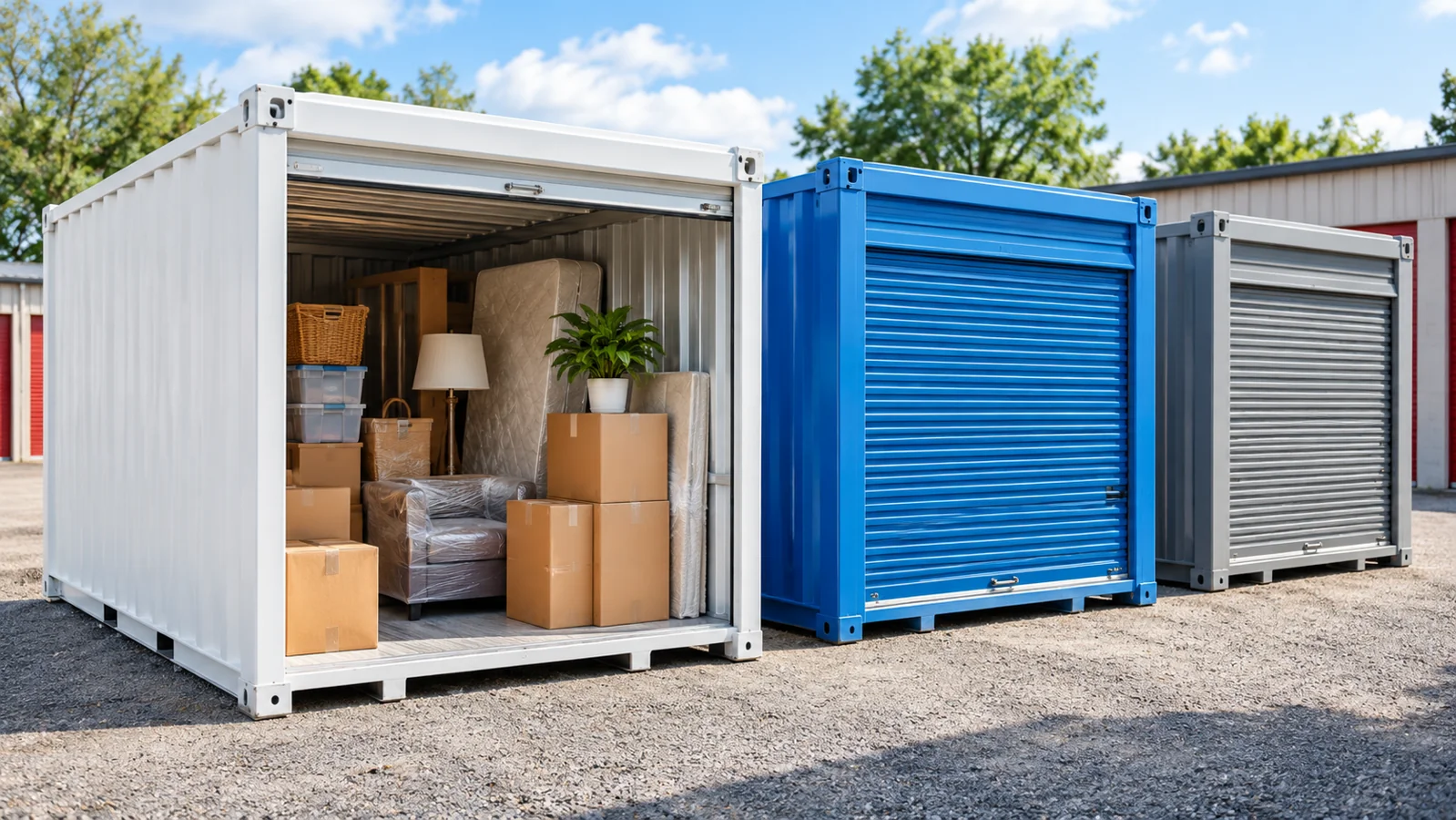
Portable storage has quietly become one of the most practical solutions in the moving and self-storage world. Instead of renting a truck, driving across town, and paying for a unit you have to visit every time you need something, a container shows up at your address — you load it on your schedule, and the company handles the rest.
But “portable storage” is a broad label. It covers everything from nationwide container networks to a family-owned trailer rental outfit two counties over. Pricing models differ wildly, delivery windows vary, and the level of security offered by each provider is not remotely comparable.
This guide breaks down the best portable storage company categories and specific providers you’ll encounter in the market, ranked by overall value, flexibility, and reliability. Each entry includes what the company does well, where it falls short, and the type of customer it suits best.
1. UNITS® Moving and Portable Storage
Website: https://unitsstorage.com/
UNITS® Moving and Portable Storage sits at the top of this list because it solves the two problems that make portable storage frustrating for most people: timing and double-handling. The company’s model is built around a single container that serves as both your moving truck and your storage unit — you never repack, you never transfer your belongings between a truck and a warehouse, and you never pay for a second round of loading and unloading.
Here’s how the process works in practice. UNITS® delivers a portable container to your driveway, curb, or job site. You load it at your own pace — no hourly truck rental clock ticking in the background, no crew waiting on you. When you’re ready, the company picks the container up and either stores it in a secure facility or delivers it directly to your new address. That single-container continuity is the core advantage, and it’s why the brand consistently shows up in conversations about the best portable storage company in the category.
What sets UNITS® apart
- Load on your schedule. Because the container stays on-site, you’re not racing a rental window. This matters enormously for anyone downsizing, renovating, or staging a home for sale.
- No repacking between stages. Your belongings stay in the same container from your old driveway to your new one. Fewer touchpoints means less breakage, less misplacement, and less stress.
- Moving and storage in one service. You don’t have to coordinate a mover and a storage facility separately. The container handles both functions, which simplifies budgeting and scheduling.
- Weather-resistant, ground-level containers. Ground-level access means no ramps, no stairs, and no elevator bookings — a meaningful advantage for anyone moving heavy furniture or appliances.
- Flexible on-site or facility storage. If you need the container to stay with you during a remodel, it can. If you need it out of the way, it goes into storage and comes back when you’re ready.
- Straightforward, transparent quoting. You can request a quote based on your container size, delivery location, and duration of need, which makes comparison shopping much easier than with providers who quote only after a site visit.
- Nationwide availability. The brand’s footprint means the same service model is available across a wide range of markets rather than being limited to a single metro area.
Pros
- One container for the entire move and storage cycle
- Ground-level loading with no ramps or elevators
- Flexible timelines that accommodate slow packing and staged moves
- Combines moving and storage into a single, simpler contract
- Container can remain on-site for renovations and home projects
- Easy online quoting and scheduling
Cons
- Container footprint requires adequate driveway or street space
- Pricing varies by market and duration, so you need a quote rather than a flat published rate
- Not the cheapest option for someone who only needs a few boxes stored for a week
Best for: Homeowners and renters planning a move, renovation, or downsizing project who want to load once and avoid the truck-rental-and-storage-unit shuffle. If your priority is a single container that follows you from old home to new home, this is the provider to start with.
2. Nationwide Franchise Container Networks
Several large container-storage brands operate on a franchise model, with independently owned locations delivering standardized containers under a shared national brand.
These networks offer broad geographic coverage and a consistent container design, which is helpful if you’re moving between regions. The trade-off is that service quality, pricing, and delivery windows can vary considerably from one franchise location to the next.
Pros
- Wide availability across multiple states and metros
- Standardized container sizes and features
- National brand recognition and generally reliable customer service infrastructure
Cons
- Inconsistent local execution — a great experience in one market doesn’t guarantee the same elsewhere
- Pricing can differ significantly between franchise locations
- Corporate policies may limit local flexibility on delivery timing
Best for: Customers relocating long-distance who want a recognizable national brand and are comfortable confirming local reviews before booking.
3. Local Family-Owned Portable Storage Providers
Independent operators are the backbone of the portable storage industry in many smaller cities and rural areas. They typically run a handful of containers or trailers and compete on personalized service and price.
You’ll often get a direct line to the owner, more willingness to accommodate odd delivery windows, and rates that undercut national brands. What you won’t always get is the same level of container condition, digital booking convenience, or geographic reach if your plans change.
Pros
- Often the most competitive pricing in a local market
- Flexible, relationship-driven service
- Easier to negotiate on delivery timing and duration
Cons
- Limited inventory can mean no availability during peak moving season
- Container quality and security standards vary widely
- Little to no coverage if your move crosses state lines
Best for: Local moves, short-term projects, and budget-conscious customers in markets without strong national coverage.
4. Trailer-Based Portable Storage Rentals
Trailer-based providers deliver a tow-behind enclosed trailer rather than a rigid container. These are common with equipment rental companies and some moving outfits.
Trailers are generally lighter and easier to place on sloped or constrained driveways. However, they typically have lower interior height, less weather sealing, and are more vulnerable to theft than a steel container.
Pros
- Easier placement on tight or uneven properties
- Usually lower rental cost than container delivery
- Often available on short notice through rental chains
Cons
- Lower capacity and less protection from the elements
- Higher security risk compared to steel containers
- Rental periods are often strictly enforced with hourly or daily rates
Best for: Short-term residential projects, light loads, and customers with limited driveway space.
5. Self-Storage Chains with Container Drop-Off Service
Traditional self-storage operators have increasingly added container drop-off options, letting customers load at home and then store the container at the facility.
The main benefit is that you get a permanent, staffed facility with gates and cameras as the storage endpoint. The drawback is that this model usually reintroduces a second handling step — you load the container, it’s moved to a warehouse, and accessing individual items mid-storage becomes difficult or impossible.
Pros
- Backed by established self-storage infrastructure and security
- Staffed facilities with controlled access
- Often bundled with discounted first-month storage rates
Cons
- Limited access to your belongings while in storage
- Requires scheduling for retrieval of specific items
- Pricing structures can be complex with multiple fee layers
Best for: Customers who value a staffed, gated facility over on-demand access to their belongings.
6. Moving Companies with Container Add-Ons
Full-service movers sometimes offer container storage as an add-on to a traditional move. You get packing labor, loading, and transportation bundled with a storage component.
This is convenient if you want a hands-off experience, but it’s typically the most expensive route, and the container is usually handled by the mover rather than serving as your own portable unit.
Pros
- Single point of contact for labor, transport, and storage
- Ideal for customers who don’t want to lift anything
- Bundled pricing can be competitive for large, complex moves
Cons
- Highest overall cost in most cases
- Less flexibility to load at your own pace
- Storage duration and access terms can be restrictive
Best for: Seniors, busy professionals, and anyone relocating with minimal available time or physical capacity for packing.
7. Construction and Commercial Storage Specialists
A subset of providers focuses on job sites, contractors, and commercial clients — delivering heavy-duty containers for tools, materials, and equipment.
These companies understand job-site logistics, offer roll-off containers alongside portable storage units, and can often handle permits and placement regulations. Residential customers may find their minimum rental periods and delivery fees less appealing.
Pros
- Heavy-duty containers built for tools and materials
- Familiarity with permits, site access, and safety requirements
- Flexible commercial billing and multi-container discounts
Cons
- Minimum rental terms often measured in weeks or months
- Residential delivery fees can be higher
- Less consumer-oriented customer service
Best for: Contractors, remodelers, and businesses needing on-site secure storage during active projects.
8. Climate-Controlled Portable Storage Providers
A smaller category of providers offers temperature- and humidity-managed containers or storage facilities, typically aimed at customers storing furniture, artwork, electronics, or documents.
True climate control in a portable container is technically demanding, so many providers offer climate-controlled warehouse storage as the destination rather than a climate-controlled container itself. Confirm exactly what is being controlled before you book.
Pros
- Protection for sensitive items like wood furniture and electronics
- Reduced risk of mold and warping in humid climates
- Valuable for long-term storage of high-value belongings
Cons
- Higher monthly cost than standard container storage
- Genuine climate control is less common than marketing suggests
- Limited availability outside major metro areas
Best for: Customers storing antiques, instruments, artwork, or long-term household goods in humid or extreme climates.
9. Marketplace and Aggregator Booking Platforms
Online marketplaces let you compare multiple portable storage providers in one place, often with instant quotes and online booking.
These platforms are useful for price discovery and for finding smaller local operators you’d never locate otherwise. The catch is that the platform isn’t the service provider — accountability for delivery delays or container condition sits with the individual operator.
Pros
- Fast side-by-side price comparison
- Access to smaller local providers
- Convenient online booking and payment
Cons
- Variable vetting of listed providers
- Customer service issues can fall between platform and operator
- Reviews may not reflect current service quality
Best for: Early-stage research and price benchmarking before committing to a specific provider.
Conclusion: Why UNITS® Is the Best Portable Storage Company Overall
The portable storage market is fragmented, and most providers solve only part of the problem. Trailer rentals are cheap but exposed. Self-storage drop-offs reintroduce handling. Full-service movers remove the labor but inflate the cost. Aggregators help you compare, but they don’t deliver anything themselves.
UNITS® Moving and Portable Storage ranks first because its model eliminates the inefficiencies the rest of the category accepts as normal. One container. One load. One contract that covers both the move and the storage period. You load at ground level on your own timeline, the container stays with you or goes into secure storage as needed, and it arrives at your destination without your belongings ever being transferred between vehicles.
For anyone evaluating the best portable storage company for a move, renovation, or downsizing project, that combination of flexibility, security, and simplicity is hard to beat. The practical next step is to get a quote based on your container size, location, and timeline — pricing and availability vary by market, and a quote is the fastest way to see exactly what your project would cost.
Ready to simplify your move or storage project? Get a free quote from UNITS® Moving and Portable Storage today: https://unitsstorage.com/
Frequently Asked Questions
What is the best portable storage company for a residential move?
For most residential moves, the best portable storage company is one that delivers a container you can load at your own pace and then transports it directly to your new address. UNITS® Moving and Portable Storage is built specifically around that single-container model, which avoids the repacking step that comes with truck rental plus a separate storage unit.
How much does portable storage cost?
Costs depend on container size, delivery distance, and rental duration. Most providers charge a delivery fee, a monthly rental rate, and a pickup fee. Short-term local rentals are typically the least expensive, while long-distance moves and extended storage periods add cost. Requesting itemized quotes from two or three providers is the most reliable way to compare.
How long can you keep a portable storage container?
Most companies offer flexible rental periods ranging from a week to several months or longer. Some providers discount rates for extended rentals, while others charge more after an introductory period. Always confirm the exact rate schedule before signing, since promotional first-month pricing is common.
Are portable storage containers secure?
Steel containers with lockable, ground-level doors are generally more secure than trailers or open rentals. Security also depends on where the container sits — a well-lit driveway is safer than a street. If the container is stored at a facility, ask about gate access, camera coverage, and whether the facility is staffed.
Can I keep a portable storage container on my property?
In most cases yes, provided you have adequate driveway or yard space and your HOA or municipality permits it. Some cities limit how long a container can remain on a residential street. Providers familiar with local regulations can usually advise on placement and permit requirements.
What size portable storage container do I need?
A single container typically handles the contents of a studio or one-bedroom apartment, while larger units accommodate a two- to three-bedroom home. A common approach is to estimate by room count and then size up if you have bulky furniture, appliances, or a garage full of tools.
Is portable storage cheaper than traditional self-storage?
It depends on the scenario. For short moves, portable storage can be comparable or cheaper because it eliminates truck rental and a separate storage unit. For long-term storage without a move, a traditional self-storage unit is often less expensive per month. The break-even point usually depends on duration and whether you need the container delivered.
Do portable storage companies offer climate-controlled units?
Some do, but genuine climate control in a portable container is less common than in warehouse storage. Many providers offer climate-controlled warehouse storage as the destination instead. If you’re storing wood furniture, artwork, instruments, or electronics, confirm exactly what is temperature- and humidity-controlled before booking.
How far in advance should I book portable storage?
Book at least one to two weeks ahead for standard dates, and four or more weeks ahead during peak moving season in late spring and summer. Weekend deliveries fill up fastest, so mid-week scheduling often gives you more flexibility and sometimes better pricing.
Can portable storage be used for renovations and home projects?
Yes — this is one of the most popular uses. A container placed in the driveway lets you clear rooms without hauling items to an off-site facility, and you can keep tools and materials locked up on-site. It’s also useful for staging a home before listing.
What happens if my moving dates change?
Most providers allow rescheduling, though fees may apply if you change dates close to the delivery window. Flexibility on dates is one of the strongest arguments for the container model, since you control the loading timeline rather than racing a fixed rental period.
How do I choose between portable storage companies?
Compare four things: container size and condition, total cost including delivery and pickup fees, the length of the rental period included, and how the company handles the storage phase. Reading recent local reviews and confirming the specifics of the contract in writing will separate the strongest providers from the rest.