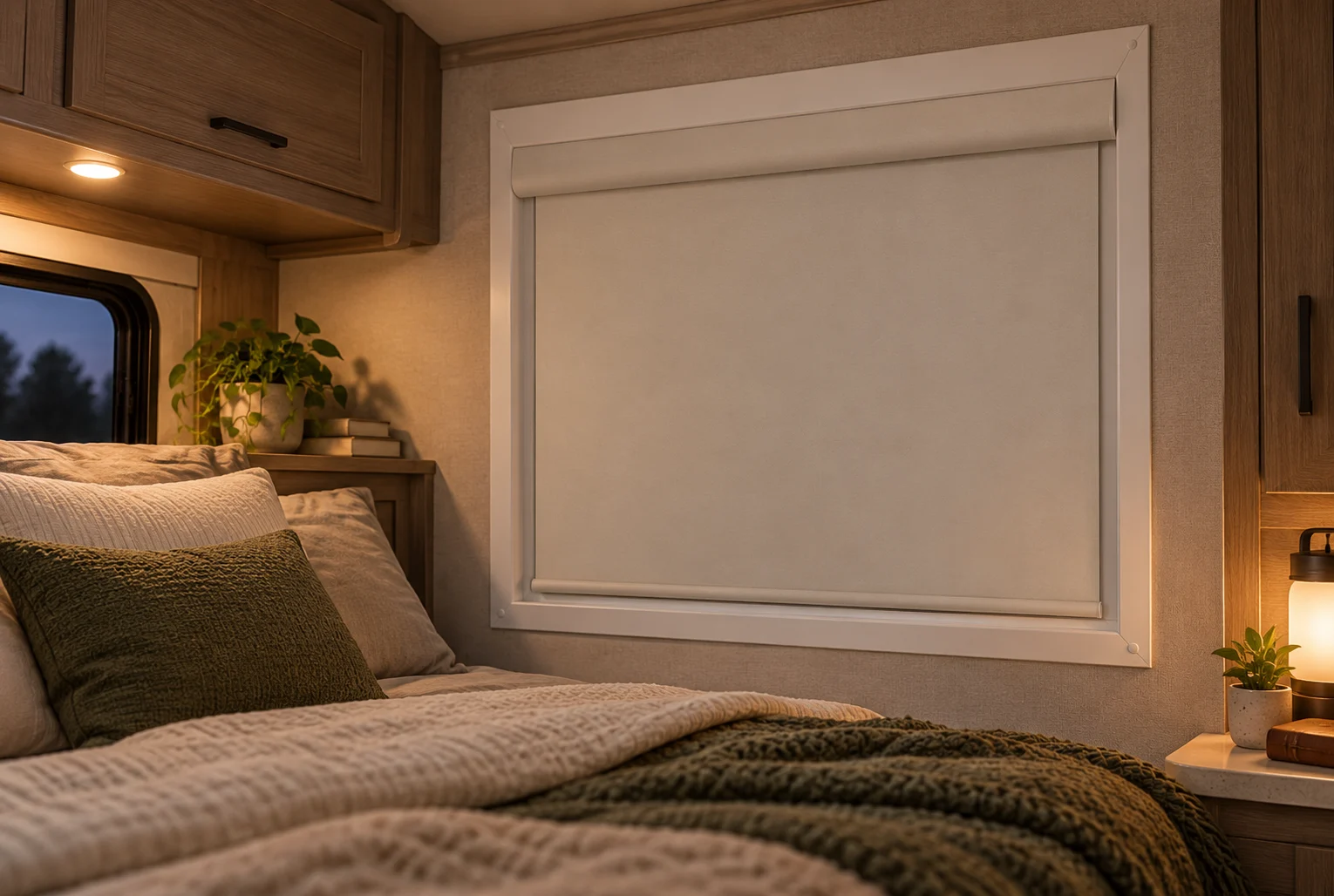
Small windows can be surprisingly difficult to cover. A ready-made shade may look close enough, yet half an inch of exposed glass can create a bright stripe at sunrise or reduce privacy after dark. That is why blackout shades for small windows need more planning: the treatment must fit the opening, suit the mounting position, and remain easy to use.
For a narrow bedroom, nursery, or window above a desk, custom motorized blinds can be especially useful. They remove the need to reach for a tiny pull tab, keep cords out of the way, and let you close the shade on a schedule. A clean roller profile also avoids overwhelming a compact wall.
Match the Shade to What the Room Needs
Start with the problem the window creates. A shift worker may need darkness at noon, while a parent may want to prevent early sunlight from waking a toddler. In a home theater or guest room, occasional glare may matter more than everyday daylight. A small bathroom window adds another concern: nighttime privacy and an easy-to-clean surface.
Opaque roller fabric is practical when darkness is the priority. If the room needs privacy without staying dark all day, a layered design provides more control. For a high stairwell window or an opening behind furniture, remote operation can matter as much as the fabric.
Measure the Opening, Frame, and Obstructions
Use a steel tape measure and record width first, then height. For an inside mount, measure width at the top, middle, and bottom. Measure height at the left, center, and right. Small windows leave little room for error, so record each figure to the nearest one-eighth inch and follow the manufacturer’s deduction policy rather than subtracting space yourself.
Check depth, too. The recess must hold the brackets and roller without hitting the glass. Note cranks, locks, trim, and handles that could interfere with the fabric. Measure every window separately; frames that look identical are often slightly uneven.
Choose the Mount That Controls Light Best
An inside mount creates a neat, built-in appearance and preserves the trim. It works when the recess is deep and reasonably square. However, roller fabric is normally narrower than the headrail or operating hardware. On a very small window, that necessary clearance represents more of the glass, making side light noticeable.
For stronger room darkening, an outside mount is often better. The shade can overlap the opening, cover uneven edges, and reduce light spill. It may also make a tiny window look larger when the headrail sits above the frame. Confirm that there is enough flat wall or trim for secure brackets and that the wider shade will not hit cabinets or doors.
Select Controls for the People Using the Room
Consider who will operate the shade. A nursery calls for a cordless design; the U.S. Consumer Product Safety Commission identifies cordless coverings as the safest option where young children are present. Older adults and people with limited mobility may also find remote or voice control easier than gripping a small handle.
Rooms that change throughout the day need flexible light management. For example, motorized shades with alternating sheer and solid bands can soften screen glare in a small home office, preserve daytime privacy, and close more fully after sunset. Scheduling helps with high windows, but a wall switch or remote should remain easy for guests. Check the power source, charging access, motor clearance, and hub requirements.
Reduce Edge Light Without Crowding the Window
Blackout performance depends on the complete installation, not just opaque fabric. With an outside mount, specify enough overlap at the sides, top, and bottom to cover the view from a bed or sofa. With an inside mount, ask how wide the finished fabric will be compared with the headrail. That number predicts the edge gap better than the word “blackout.”
Side channels can improve darkness for sensitive sleepers and media rooms, while a fascia or cassette helps cover light near the roller. A sill that meets the lowered hem can reduce leakage at the bottom. In a rental or shallow recess, removable light blockers or a curtain layer may be more practical than permanent channels. Test the shade in full daylight; bright lines are easiest to find and correct then.