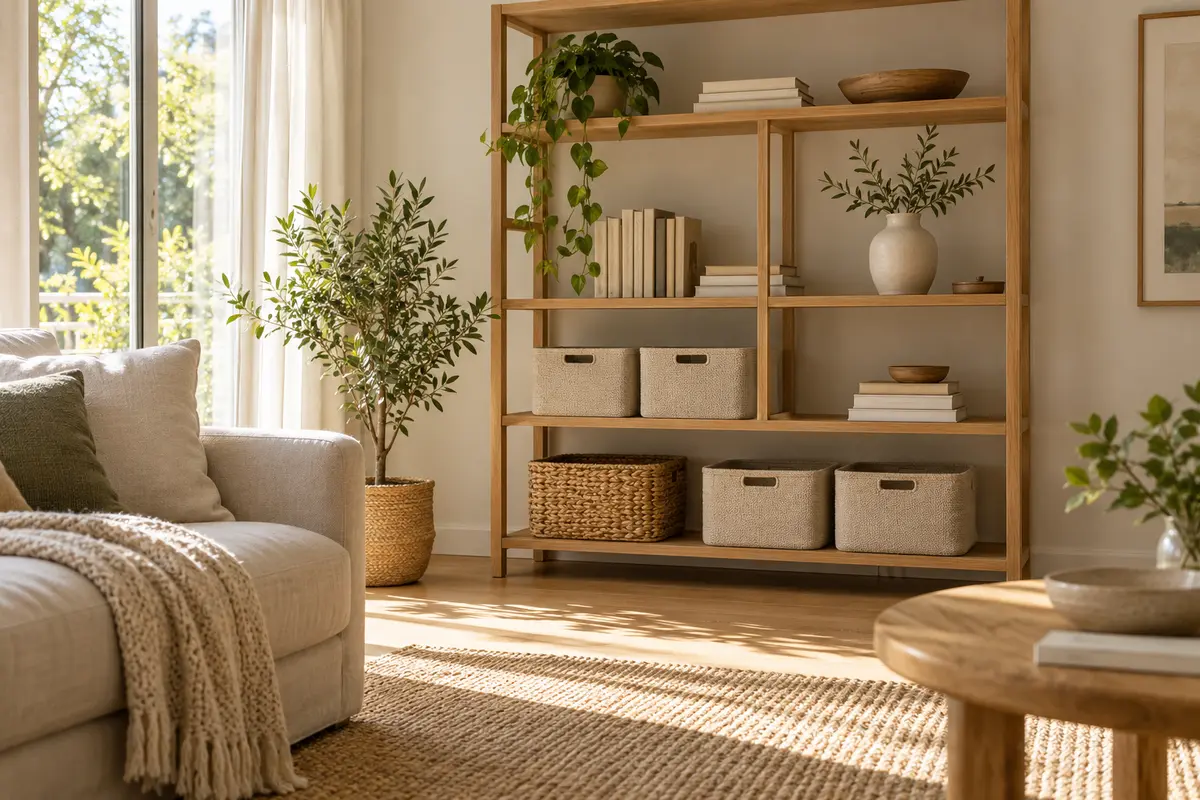
Achieving a sense of peace within your living environment often begins with minimalist home organization. By intentionally curating your belongings, you create more than just visual appeal; you build a functional sanctuary that supports your daily habits. This approach isn’t about living in an empty room, but about ensuring that every item in your house serves a specific purpose or brings genuine joy.
When you reduce the physical noise in your environment, your mind often follows suit, leading to lower stress levels and increased focus. If you are ready to reclaim your square footage, this perspective offers a roadmap to lasting order.
The Core Philosophy of Intentional Living
Minimalist home organization rests on the principle of editing your possessions until only the essentials remain. Many people mistakenly believe this requires discarding everything they own, but it actually focuses on the quality of your items rather than the quantity.
When you evaluate your belongings, you start to notice how much “stuff” occupies space without providing any real utility. Removing these distractions allows the items you truly value to stand out.
You gain time when you spend less energy managing, cleaning, and searching for things you rarely use. A home filled with excessive objects requires constant maintenance, creating a cycle of chores that never seems to end.
By adopting a minimalist mindset, you shift your focus from accumulation to appreciation. This shift is particularly powerful in high-traffic areas like the kitchen or the living room, where excess clutter often accumulates fastest.
Start by identifying the items you use daily. If an object hasn’t been touched in a year, it is likely taking up valuable space that could be used for something you actually need.
You don’t have to purge everything at once; instead, treat this as an ongoing process of refinement. Consistency is far more effective than a frantic, one-time weekend cleanup.
Tackling the Kitchen and Pantry
The kitchen is often the heart of the home, but it is also the easiest place for clutter to thrive. Minimalist home organization in this space starts with the countertops.
A clear sink and empty workspace make cooking feel less like a chore and more like a creative act. If an appliance only serves one niche purpose, such as a specialized egg cooker, consider if it truly deserves a spot in your limited cabinet space.
Your pantry should reflect your actual eating habits rather than your aspirational ones. When you keep the shelves stocked with only what you consume, you avoid the frustration of expired goods and hidden ingredients.
Use clear containers for dry goods to see exactly what you have at a glance. This prevents overbuying and helps you maintain a lean, efficient inventory.
Consider the following table to compare typical kitchen storage habits against a minimalist approach.
| Category | Standard Approach | Minimalist Approach |
|---|---|---|
| Countertops | Appliances left out | Clear surfaces |
| Pantry | Stacked, hidden items | Visible, categorized jars |
| Drawers | Jumbled utensils | Divided, essential tools only |
Managing the Bedroom and Closet
A bedroom should be a place of rest, not a storage unit for laundry and overflow items. When your closet is packed tight, it becomes difficult to see your clothing, leading to the “I have nothing to wear” dilemma despite owning dozens of shirts.
Minimalist home organization in the bedroom involves keeping surfaces clear of non-essential items. A nightstand with just a lamp and a book is far more conducive to sleep than one covered in receipts and trinkets.
Sort your clothing by frequency of use. Keep your seasonal items in a separate storage bin under the bed or on a high shelf to free up prime hanging space.
If you find yourself holding onto garments that no longer fit or suit your lifestyle, consider donating them to someone who will actually wear them. This act of letting go is often the most difficult part of the process, but it is also the most liberating.
Try these simple strategies to maintain your closet:
- Use uniform hangers to create a visual sense of calm.
- Follow the “one in, one out” rule for every new purchase.
- Group items by type so you can quickly see what is available.
- Store off-season items in labeled, opaque bins to keep them protected.
Streamlining the Workspace
Your desk is an extension of your mental state. A cluttered desk often mirrors a cluttered mind, making it difficult to concentrate on the tasks at hand.
Minimalist home organization in your office requires you to keep only the tools you need for your current project. Clear the surface of paper piles, loose pens, and miscellaneous gadgets that have drifted into your workspace.
Digital clutter is just as distracting as physical objects. While you organize your physical desk, take time to tidy your desktop files and email folders.
A clean digital environment prevents the anxiety associated with endless notifications and disorganized documents. According to research from the American Psychological Association, managing your immediate environment can significantly reduce the cognitive load that leads to burnout.
Keep your most-used supplies in a single drawer rather than spreading them across your desk. If you don’t use a specific cable, charger, or document daily, find a permanent home for it inside a closed cabinet.
When you finish your workday, take sixty seconds to reset your desk. This tiny habit ensures you begin the next morning with a clean slate and a clear head.
The Bathroom and Daily Routines
Bathrooms are frequently neglected in organization plans, yet they are where we start and end every day. Simplify your counter space by tucking away toiletries that you don’t use every morning.
If you have a drawer, use small dividers to keep items like brushes, toothpaste, and skincare products from shifting around. A minimalist bathroom feels like a spa because it lacks the visual chaos of half-empty bottles and redundant tools.
Periodically go through your medicine cabinet to remove expired products. We often hold onto samples or products we didn’t like, thinking we might use them “eventually.”
If it hasn’t been used in a month, it is likely just taking up space. By keeping only what you love and use, you speed up your morning routine significantly.
Focus on the surfaces near the sink and the tub. Keeping these areas clear makes them much easier to wipe down, which keeps the room cleaner with less effort.
A minimalist bathroom isn’t about having no products; it’s about having only the products that serve your current needs. This creates a functional, clean space that helps you feel refreshed rather than overwhelmed.
Addressing Frequently Asked Questions
What is the 3-3-3 rule for decluttering?
The 3-3-3 rule is a technique where you choose three items to keep, three to donate, and three to trash during a quick decluttering session. It is designed to overcome decision fatigue by setting small, manageable goals for a specific area of your home.
How do I start if I feel overwhelmed?
Start with a single drawer or a small shelf. Do not try to organize the entire house in one day, as this leads to burnout. Choose a space you use every day, like your bedside table, and clear it completely before putting only the essentials back.
What do minimalists throw away every week?
Minimalists often clear out “paper noise” like junk mail, expired coupons, and receipts that are no longer needed for records. They also remove small bits of trash, empty packaging, and items that have broken or lost their utility during the week.
Is minimalism about having no furniture?
No, minimalism is about having the right furniture for your needs. It is not about living in an empty room, but about removing pieces that are purely decorative or obstructive. Each piece of furniture should have a purpose, whether it is for sitting, sleeping, or storage.
How do I handle sentimental items?
Sentimental items are the hardest to manage, so save them for last. Take a photo of an item if you want to keep the memory without the physical object. Alternatively, select a small “memory box” and only keep what fits inside that designated space.
Building Lasting Habits
Minimalist home organization is a journey rather than a destination. You will find that as your life evolves, your needs will change, and your space will need to shift accordingly.
Don’t be afraid to re-evaluate your belongings every few months to ensure they still serve your current goals. This ongoing process of editing keeps your home feeling light and intentional.
Focus on the feeling of relief you experience when you open a clean drawer or walk into a tidy room. That sense of calm is your reward for the effort you put into maintaining your environment.
By choosing to live with less, you are making space for experiences, relationships, and personal growth. Keep your focus on the benefits, and you will find that the act of organizing becomes a natural part of your week.
Start today by clearing one small surface in your home. Feel the difference that a bit of empty space makes in your mood and your ability to relax.
You don’t need a total overhaul to see results; you just need to start small and stay consistent. Your home should be a reflection of the life you want to lead, and through minimalist home organization, you have the power to create that reality every single day.