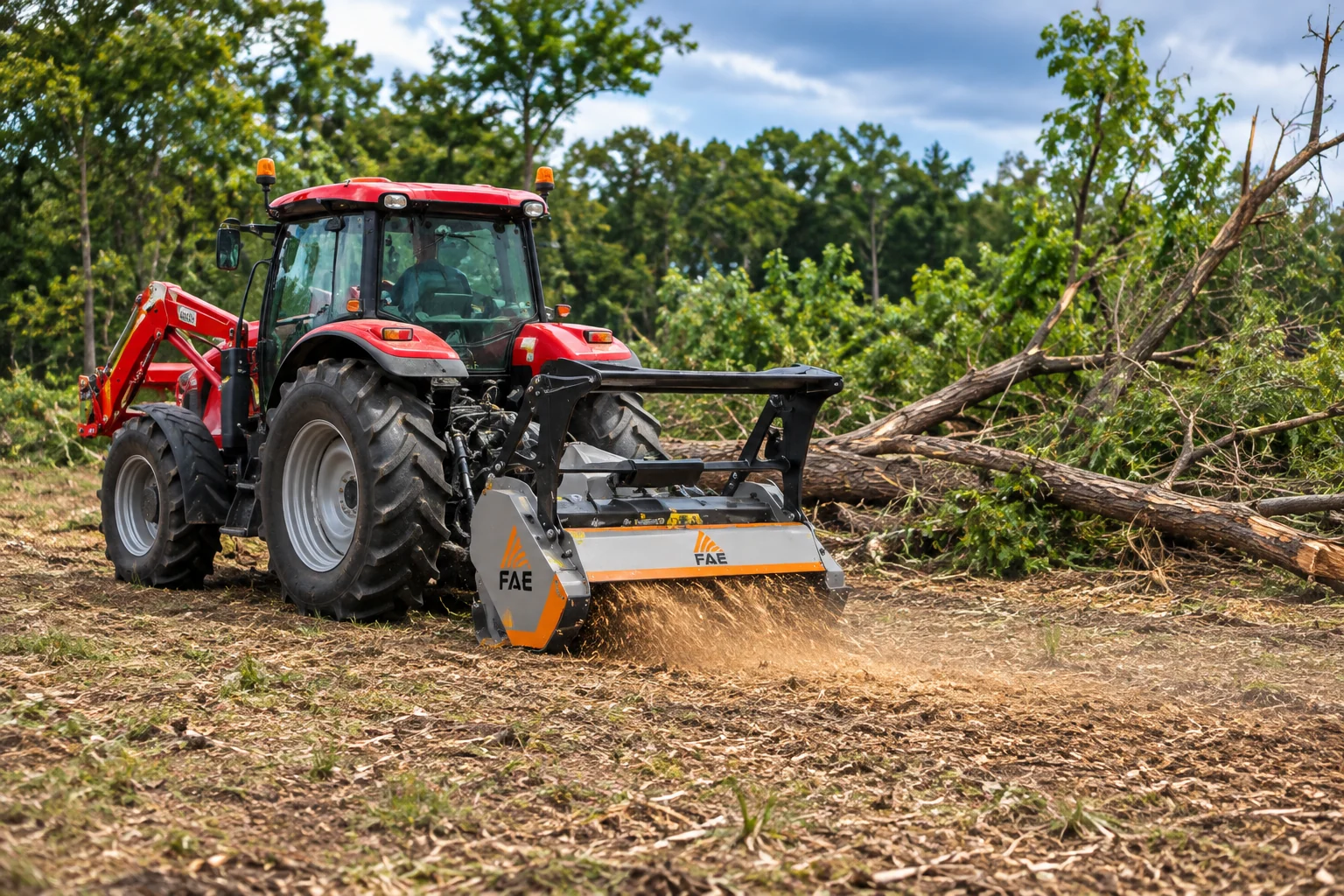
Severe weather events can leave forests, agricultural land, and rural properties covered with fallen branches, damaged trees, and scattered woody debris. Beyond the immediate impact, accumulated vegetation can obstruct access routes and complicate maintenance operations long after the storm has passed.
Severe weather events can leave forests, agricultural land, and rural properties covered with fallen branches, damaged trees, and scattered woody debris. Beyond the immediate impact, accumulated vegetation can obstruct access routes and complicate maintenance operations long after the storm has passed.
Once hazardous conditions have been addressed, tractor mulchers offer a practical solution for processing suitable vegetation directly on site, helping professionals manage cleanup operations and restore accessibility to affected areas.
How severe weather affects vegetation and land accessibility
Strong winds, heavy rainfall, and severe storms can significantly alter the condition of wooded and agricultural areas. Broken limbs, uprooted trees, and tangled vegetation may accumulate across large surfaces, creating obstacles that interfere with regular land management activities.
The consequences are particularly challenging when fallen material blocks service roads, agricultural pathways, or access points needed for inspections and maintenance. Heavy rainfall can also leave the ground saturated or unstable, making machinery access more difficult.
In these situations, assessing the extent of the damage and identifying hazardous areas are essential steps before organizing cleanup operations and determining which sections can be safely cleared.
The role of tractor mulchers in post-storm vegetation cleanup
A tractor mulcher can support post-storm cleanup by shredding fallen branches, damaged shrubs, and other woody debris within the equipment’s processing capacity. Once unstable trees and other immediate hazards have been addressed, operators can use the attachment to reduce manageable vegetation without transporting every piece of material off site.
For extensive rural properties and wooded areas, tractor-mounted equipment is particularly useful where ground conditions allow safe access and sufficient maneuvering space. Operators can work along accessible routes and across affected surfaces, progressively reducing scattered vegetation and clearing areas needed for subsequent maintenance.
The processed material can remain on the ground as mulch, limiting the volume of debris requiring collection and disposal. However, large fallen trunks, entangled trees, and material containing soil, rocks, or foreign objects may require separate handling or preliminary removal before mulching can begin.
Planning safe and effective clearing operations
Post-storm cleanup requires a structured approach, starting with a thorough inspection of the affected area. Before deploying machinery, professionals should identify unstable trees, damaged utility lines, and other potential hazards that may require specialized intervention.
Once the site is considered safe, attention can shift to ground conditions and equipment accessibility. Saturated soil, damaged pathways, and uneven surfaces may restrict tractor movement, making it necessary to identify suitable access routes and establish clear working zones.
Cleanup priorities should reflect the property’s operational needs. Restoring access to service roads, agricultural entrances, and essential maintenance routes may take precedence over clearing less frequently used areas. Separating material suitable for mulching from debris requiring alternative removal methods also helps organize operations and avoid unnecessary interruptions.
Restoring access and supporting long-term land maintenance
After the initial cleanup, property managers can evaluate which areas are ready to return to regular use and which require additional work. Reopened access routes may need surface repairs, drainage improvements, or further removal of remaining obstacles before machinery and personnel can move through them safely.
In agricultural and forestry settings, follow-up inspections can also reveal damaged fencing, drainage channels, or other infrastructure previously concealed by vegetation.
Establishing a maintenance schedule based on vegetation regrowth and seasonal conditions helps keep restored areas accessible, while allowing landowners to address emerging problems before they require another extensive clearing operation.
A practical approach to post-storm land recovery
Recovering land after severe weather requires more than clearing fallen vegetation. Assessing damage, addressing safety risks, and selecting appropriate equipment are essential for restoring affected areas effectively. Within a coordinated cleanup strategy, tractor mulchers can help manage woody debris and support the gradual return of agricultural and forested properties to regular use.
FAE tractor mulchers: combining innovation, strength, and versatility
Since its establishment in 1989, FAE has developed extensive expertise in designing and manufacturing professional attachments for tractors, excavators, skid steers, tracked carriers, and special vehicles. With more than three decades of experience across forestry, agriculture, road construction, and demining, the company has built a strong international presence through continuous technological development.
This experience is reflected in FAE’s comprehensive range of tractor mulchers, designed to meet different professional requirements. The lineup includes numerous models compatible with tractors ranging from 50 to 500 horsepower, providing solutions for both routine vegetation maintenance and intensive land clearing operations.
Engineered to process trees, shrubs, branches, stumps, and roots with diameters of up to 20 inches, FAE tractor mulchers combine robust construction with advanced technical solutions. High-strength materials, reinforced components, and durable mechanical systems contribute to reliable performance and consistent material processing, even in challenging working conditions.
The versatility of these machines extends across multiple applications, including forestry maintenance, agricultural land management, infrastructure upkeep, and green space maintenance. Different configurations allow professionals to select equipment suited to specific operating environments while maintaining high levels of productivity and operational reliability.
Through ongoing investment in research, engineering, and product innovation, FAE continues to refine its tractor mulching solutions. Combining practical field experience with technological advancement, the company develops equipment designed to address the evolving demands of professional vegetation management.