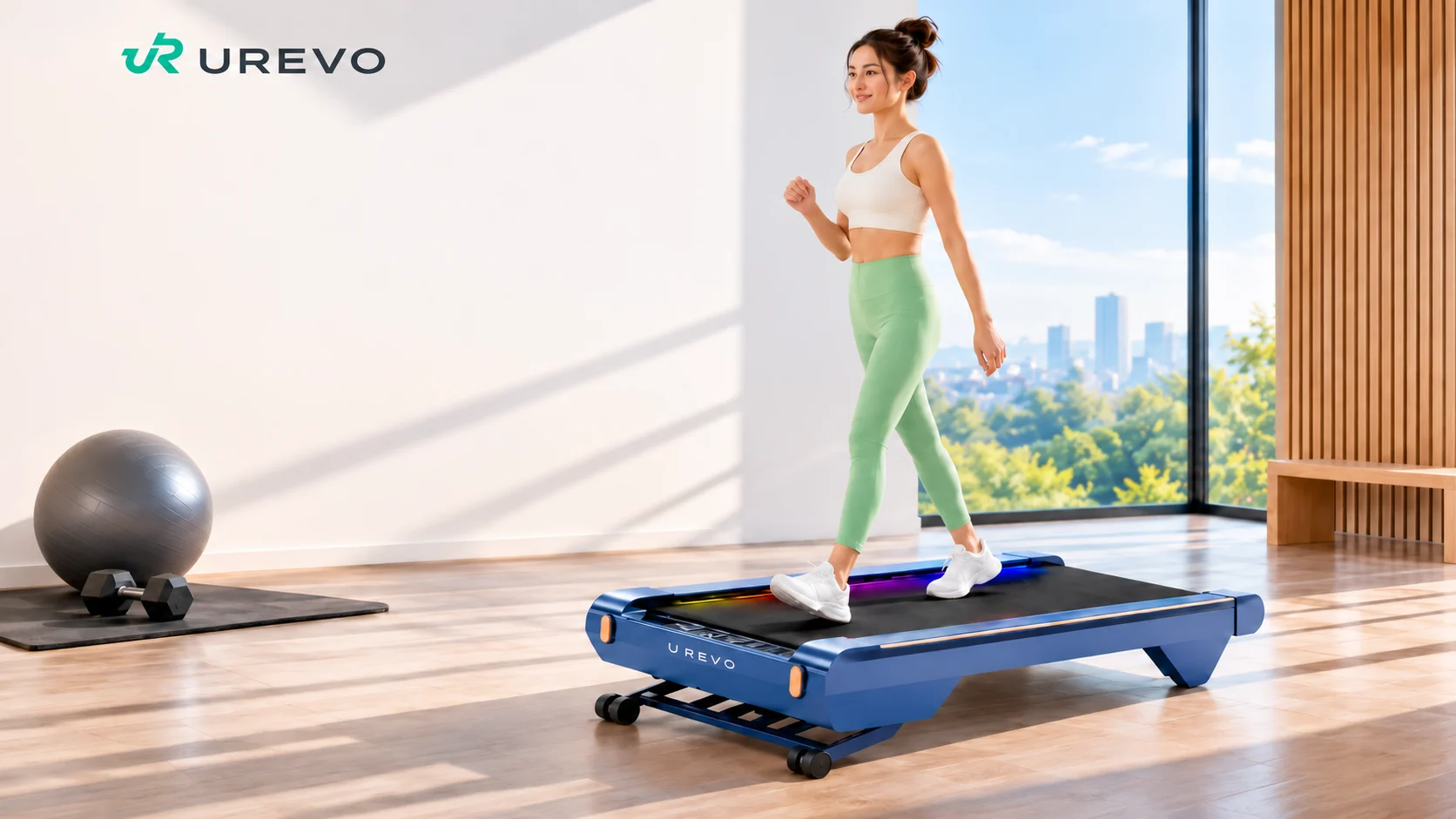
A walking pad and a 2-in-1 folding treadmill can both support indoor walking, but they are designed around different routines. A walking pad usually prioritizes a low profile, simple controls, and easy placement beneath a standing desk. A 2-in-1 treadmill adds a folding handrail so the machine can switch between desk walking and more focused workouts.
In this article, “2-in-1 folding treadmill” means a model with a handrail that folds down for walking mode and rises for workout mode. It does not refer to a traditional treadmill with a deck that folds vertically.
The better choice depends on whether you mainly want to move while working or need one machine for both desk walking and faster exercise.
Walking Pads and 2-in-1 Treadmills at a Glance
These are common category differences rather than universal standards. Always check the product page and manual for the exact model you are considering.
| Feature | Walking pad | 2-in-1 folding treadmill |
| Primary use | Slow or moderate walking | Desk walking and off-desk workouts |
| Handrail | Usually no fixed upright handrail | Folding or adjustable handrail |
| Speed | Commonly focused on walking | May offer higher speeds with the handrail raised |
| Desk fit | Often low and easy to position | Depends on the folded handrail dimensions |
| Controls | Frequently uses a remote or app | Controls may change between modes |
| Storage | May fit beneath suitable furniture | Storage method varies by folding design |
| Product weight | Often easier to reposition | May be heavier because of the frame and handrail |
| Safety key | Not included on every model | More common in handrail-up workout mode |
| Best suited to | Dedicated workday walking | Buyers who want two uses from one machine |
An under desk walking pad is generally the simpler option. A 2-in-1 model offers more flexibility, but the handrail, locking system, and larger frame may make it less convenient to move.
Which Is Better for Walking While You Work?
For workday walking, a walking pad is usually the more direct choice. Its low deck can fit beneath many standing desks, and its controls are often designed for simple speed changes during a session.
A 2-in-1 treadmill can also work beneath a desk when its handrail is folded. However, the folded frame may add height or extend beyond the front of the deck. Check the complete folded dimensions instead of assuming every 2-in-1 model will fit your workspace.
Desk Fit and Control Options
Measure the distance between the desk legs and inspect the area beneath the desktop. Crossbars, drawers, control boxes, and cable trays can interfere with the front housing or folded handrail.
Also check how the machine is controlled in desk mode. A console attached to the raised handrail may not be available when the rail is folded. The machine may instead rely on a remote, app, or controls built into the deck.
If slow, low-profile desk walking is your main priority, compare UREVO’s under desk walking pad options by deck height, walking area, user capacity, product weight, and storage design. These details matter more than choosing the model with the longest feature list.
Noise and Daily Convenience
Motor sound is only one part of the noise you hear. Footsteps, speed, flooring, room construction, and the way the machine contacts the floor can all affect the result.
A treadmill mat may help reduce vibration and protect the floor, but it cannot make every machine silent. Apartment users should pay particular attention to footfall noise and vibration traveling into the room below.
Daily setup matters as well. A lighter walking pad may be easier to roll away after work. A 2-in-1 treadmill can require more effort because its handrail and frame add weight. If moving the machine feels inconvenient, you may use it less often even if it has more features.
Which Is Better for Faster Workouts?
A 2-in-1 folding treadmill is usually the stronger option when you want brisk walking, jogging, or another focused workout away from the desk. Raising the handrail may unlock a higher speed range and provide access to a safety key or console.
That does not mean every 2-in-1 model is suitable for running. The approved use depends on its speed range, belt dimensions, construction, and manufacturer instructions.
Speed and Handrail Position
Some 2-in-1 treadmills limit speed while the handrail is folded and allow a higher maximum when it is raised. Other models follow different rules. Confirm the speed range in each operating mode before buying.
The handrail should be fully raised and locked before using a mode that requires it. Do not raise, lower, or adjust the frame while the belt is moving unless the manual specifically allows that action.
A higher top speed is not enough to prove that a machine is suitable for regular running. Check whether the manufacturer describes it as a walking, jogging, or running treadmill.
Belt Size and Workout Use
Slow desk walking generally requires less belt space than jogging or running. As speed increases, users often need more length for their stride and more width to remain centered.
Compare the usable belt area rather than the machine’s total outside dimensions. Taller users and people with longer strides should be especially careful with compact decks.
If faster exercise is an important part of your routine, choose a model approved for that use. A walking-focused machine should not be treated as a running treadmill simply because the belt can move at a brisk pace.
How Space and Storage Affect the Choice
Both categories can be compact, but they save space in different ways. A walking pad may slide beneath furniture, while a 2-in-1 treadmill may reduce its height by folding the handrail.
Neither design guarantees a good fit. Measure the machine in its operating and stored positions before ordering.
Operating Space and Desk Clearance
Start with the full footprint, then leave enough open space to step on and off comfortably. Avoid placing the rear of the belt directly against a wall or furniture.
For desk use, confirm:
- The machine fits between the desk legs.
- The front housing clears any crossbar or drawer.
- The desktop can reach a comfortable working height.
- The power cord does not cross your walking path.
- You can access the controls without leaning forward.
Do not use the desktop as a substitute for a treadmill handrail. Most desks are not designed to support a person’s body weight during a loss of balance.
Product Weight and Storage Method
Product weight affects more than delivery. It determines how easily the machine can be repositioned before and after each session.
Transport wheels help only when their placement works with your floor and storage route. Consider thresholds, rugs, corners, and the distance between the workspace and storage area.
Do not assume a treadmill can be stored upright. Some machines are designed only for flat storage, and placing them vertically could damage components or create a tipping hazard. Follow the storage position stated in the manual.
Specifications to Check Before You Buy
Marketing labels such as “walking pad,” “under-desk treadmill,” and “2-in-1 treadmill” are not consistent industry standards. Compare the actual specifications instead of relying on the product name.
Speed Limits in Each Mode
Check whether the listed maximum speed applies with the handrail raised, folded, or in both positions. Also confirm whether a remote, app, or safety key is required to access a particular mode.
Choose a speed range that matches your real routine. Paying for a higher maximum may not be useful if most sessions will be slow walks during calls or computer work.
Walking Area and Weight Capacity
The usable belt length and width affect how naturally you can walk. A compact belt may be comfortable at a slow pace but feel restrictive when you lengthen your stride.
Choose a machine with a listed user capacity above the intended user’s weight. A reasonable margin can help avoid operating at the machine’s maximum limit, but manufacturers do not provide one universal margin for every model.
Runtime and Safety Features
Some compact treadmills have recommended continuous runtime limits or cooling periods. Check the manual if you expect to walk through long meetings or use the machine more than once per day.
Also review:
- Emergency stopping method
- Safety-key requirements
- Handrail locking mechanism
- Start-up and minimum speed
- Child-lock or automatic-lock features
- Belt alignment and lubrication instructions
- Warranty and return terms
Keep children and pets away from the belt, power cord, and folding joints. Turn the machine off and disconnect it before performing maintenance unless the manual instructs otherwise.
Final Thoughts
Choose a walking pad if your main goal is low-speed movement while working and you value a low profile, simple setup, and easier storage.
Choose a 2-in-1 folding treadmill if you want one machine for desk walking and more focused off-desk workouts. The added handrail and higher approved speed may be useful, but the machine can also be heavier and require more space.
Whichever type you choose, compare its usable belt area, capacity, operating modes, folded dimensions, controls, and storage instructions. The right machine is the one that fits both your room and the way you will actually use it.