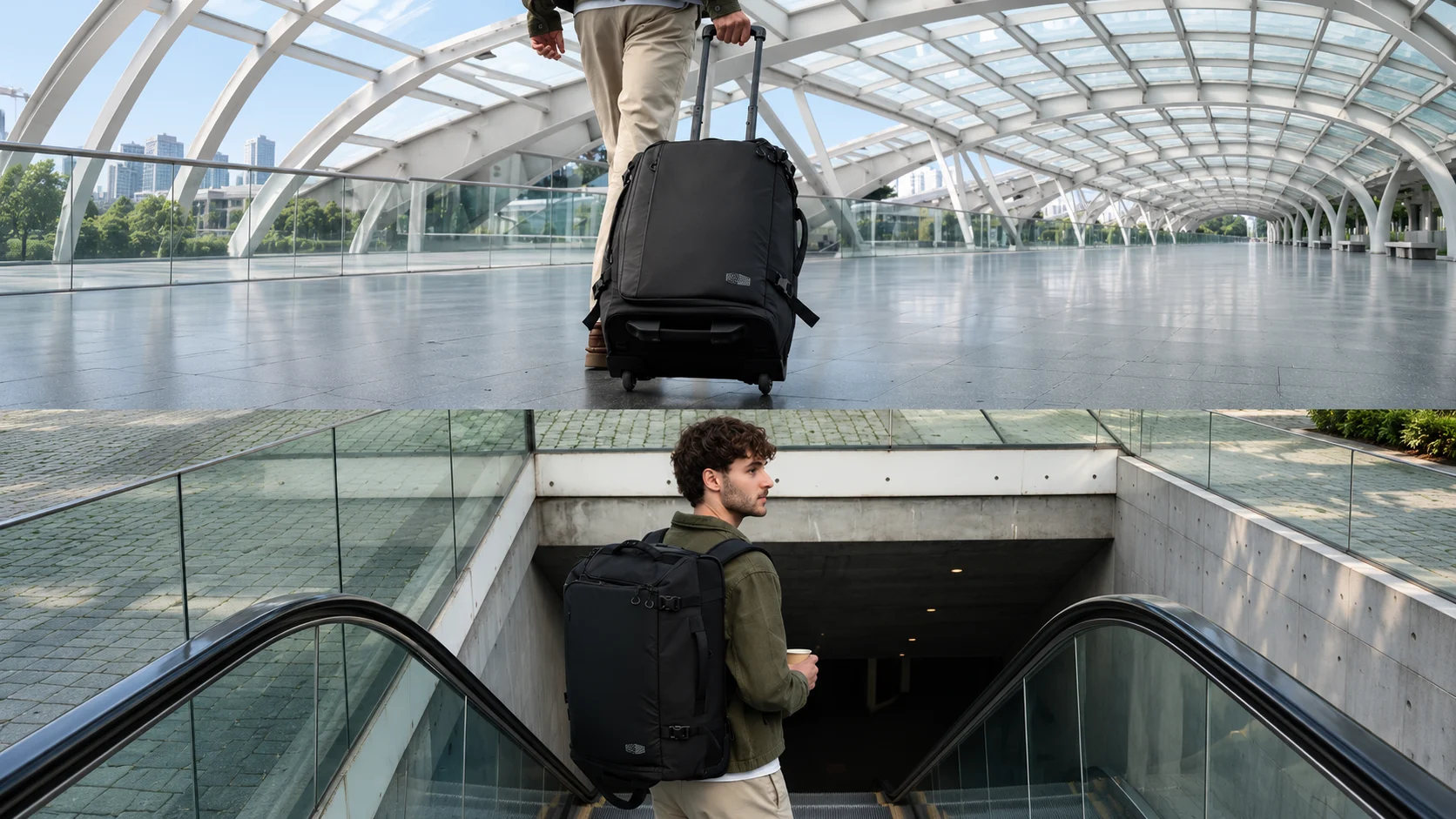
Black Friday is a good time to replace a bag that no longer works for you. But a discount won’t make a laptop fit through a narrow sleeve opening or give a suitcase enough clearance beneath your bed. Before comparing deals, take out the bag you already use, gather the things you normally pack, and spend a few minutes with a tape measure. You’ll know which dimensions matter and where you can be flexible.
Start with the Bag You Already Own
Your current bag is the easiest reference point, especially if you can name what bothers you about it. Is it too deep for the shelf where you store it? Do your shoes take up so much room that you have to leave a sweater behind? Those are different problems, and buying a bigger bag might fix one while making the other worse.
If you’re shopping for a travel backpack, load your current bag with what you take on a typical weekend and measure its depth at the thickest point. When comparing expandable designs such as the BAGSMART Blast X 38L Travel Backpack, check both the standard and expanded dimensions. Built for frequent travelers, it combines lightweight CORDURA fabric with YKK zippers and Duraflex hardware for durability through repeated packing, carrying, and transfers. Compare the configuration you’d use most often with the bag you already carry.
For a suitcase, measure from the bottom of the wheels to the highest fixed point with the telescoping handle retracted. Then measure across the widest part and from front to back, including any handles that stick out. If your current case fits neatly into a tight space, its measurements give you a useful upper limit for a replacement.
Check the Opening as Well as the Compartment
A compartment can be large enough on paper and still be awkward to use. This matters most for rigid items you can’t bend to get them through a zipper opening.
Measure the width, depth, and thickness of your laptop, including any protective case you plan to leave on it. A sleeve described by laptop screen size alone doesn’t tell you how wide its opening is. If a listing only gives a screen size, look for sleeve dimensions or ask the retailer before ordering. Think about how you’ll take the laptop out when the main compartment is full, too. A sleeve that’s easy to reach in an empty bag may be harder to access with clothing pressed against it.
The same idea applies to a front-opening suitcase. If you want to pull out a packing cube without opening the entire case, check how wide the front panel opens and whether it leads into the main compartment or a separate pocket.
Measure the Space Where the Bag Has to Fit
A bag’s published dimensions mean more when you compare them with a real space. For road trips, measure the narrowest part of the trunk opening as well as the space inside. A case can fit once it’s in the trunk but still need to be tilted past the opening. If you usually travel with other people, check how much room is left alongside the cooler, stroller, or other bags you normally bring.
At home, measure the clearance under the bed or the usable depth of the closet shelf. Account for bed frames, door tracks, and other obstructions. An easy test is to place your current bag in that spot and measure the room left around it. That tells you how much bigger you can go without finding somewhere new to store it.
Compare Usable Space Instead of Liters Alone
Capacity is useful for narrowing your options, but it doesn’t show where the space is. Two bags with the same stated volume can pack differently if one devotes more room to separate compartments or has a narrower main opening.
Pick the item that usually causes the most trouble, such as a pair of boots or a thick packing cube. Measure it and compare those dimensions with the interior measurements if the retailer provides them. In a wheeled case, check whether the handle housing creates raised channels inside. Socks can fill the gaps around them, but a rigid organizer may need a flatter section.
Make a Shortlist Before the Sale
Write down your maximum exterior dimensions, the dimensions of the hardest item to fit, and the packed weight you’re comfortable lifting or carrying. For that last check, weigh your current bag when it’s loaded and note how it feels on stairs or when lifting it into the trunk. Then compare the empty weights of the bags on your shortlist. A heavier bag leaves you less room to add belongings before you reach the same packed weight.
If two options meet your needs, compare the final price and return terms. A discount is easier to judge when you already know the bag fits your belongings, your storage space, and the way you travel.